Supreme Court Justices Appear Wary of Texas and Florida Limits on Social Media Moderation
In hours of oral argument on Monday, several justices signaled concern about state laws that would restrict how large platforms remove users and posts, in cases experts call among the most significant First Amendment disputes in a generation.
By Juan Gonzalez ·
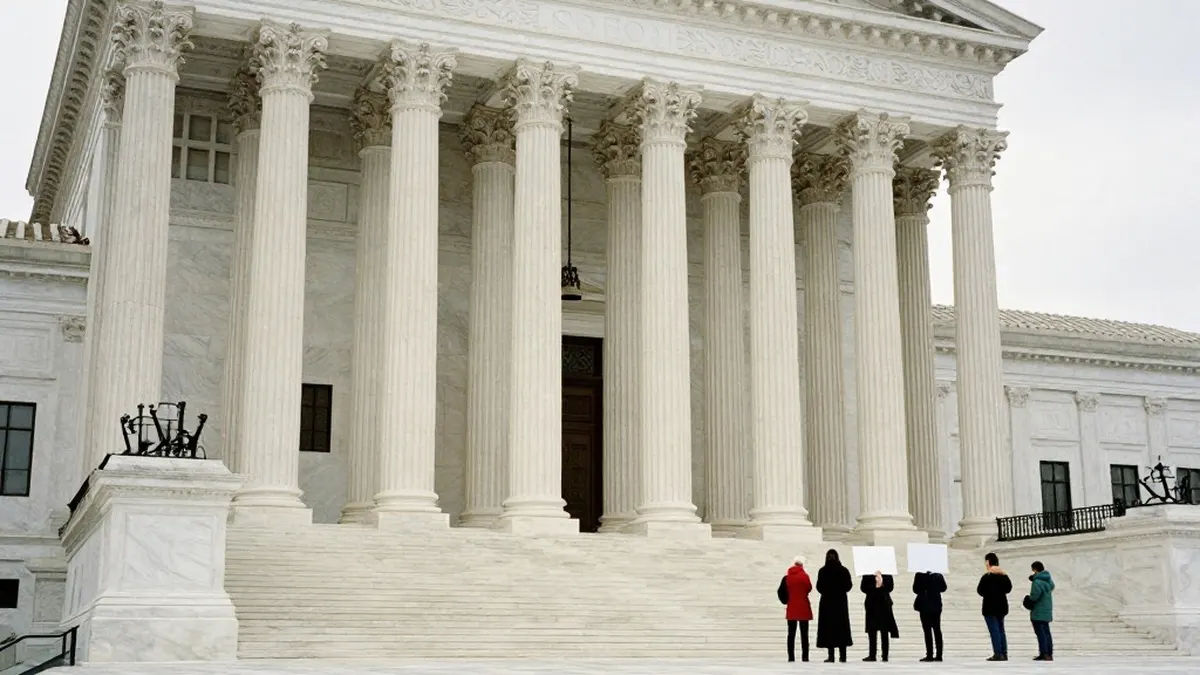
The U.S. Supreme Court on Monday heard arguments in a pair of cases that could shape the future of the Internet. Legal experts describe them as the most important First Amendment cases in a generation. At issue is whether states such as Florida and Texas can require large social media companies to carry content the platforms consider hateful or objectionable.
Several justices, including Chief Justice John Roberts, appeared sympathetic to a central argument from the platforms: that long-standing free speech precedent bars the government from compelling people or businesses to speak. Roberts questioned whether the court's first concern should be the state regulating what the court has called the modern public square. Later in the session he returned to the theme, saying states and private actors are fundamentally different under First Amendment analysis.
The laws grew out of the aftermath of the 2021 attack on the U.S. Capitol, when major platforms removed then-President Donald Trump out of concern that his posts could provoke further unrest. Republicans in Florida and Texas responded with sweeping measures that bar the largest platforms from banning users over their political viewpoints and require them to give individual explanations when posts are edited or removed. Texas Gov. Greg Abbott said at the bill signing that "freedom of speech is under attack in Texas." A separate Florida law also prevents platforms from quickly changing their terms of service and threatens large financial penalties.
Two industry groups, NetChoice and the Computer & Communications Industry Association, sued. CCIA president Matt Schruers said the laws interfere with how companies operate, from basic policies to editing and deleting posts. He said guidelines are needed to keep communities from being "polluted," ranging from off-topic posts to far more serious conduct such as grooming children. Attorney Paul Clement, arguing for the platforms, drew laughter by saying a Catholic site should not be forced to give voice to a "notorious Protestant," and warned that if the laws stood, platforms might consider offering Florida users nothing but puppy content in the interim.
Lawyers for the states say the platforms discriminate against conservative views. Florida Solicitor General Henry Whitaker told the justices the platforms have no First Amendment right to apply their policies inconsistently or to deplatform certain users. John Whitehead of the conservative-leaning Rutherford Institute, who filed a friend-of-the-court brief, argued that the answer to foolish speech is debate, not elimination. Other supporters of the states contend the sites merely host content rather than make editorial judgments deserving strong constitutional protection.
The justices must choose between sharply different views of what social media is. The platforms may resemble old-style phone companies, open to all without filtering, or they may resemble bookstores and newspapers, which curate information and receive the highest First Amendment protection. The companies lean partly on the 1974 case Miami Herald v. Tornillo, in which the court sided with a newspaper that Florida had tried to force to run op-eds. Justice Samuel Alito appeared to struggle with the precedents, suggesting modern social media fits neither mold.
Justices also questioned the breadth of Florida's law, wondering whether services such as Uber, Etsy and Venmo could be covered and how that would affect the analysis. Solicitor General Elizabeth Prelogar urged a narrow ruling focused on the largest platforms and the burdens the laws place on them, leaving questions about other services for another case.
The industry groups are backed by organizations across the political spectrum, including the U.S. Chamber of Commerce, Americans For Prosperity and the American Civil Liberties Union. Rupa Bhattacharyya, a former Justice Department lawyer now at Georgetown University Law Center, said moderation helps keep some of the worst hate and violence off the Internet. She noted that extremist groups such as the Proud Boys and the Islamic State have used social media to recruit and broadcast violence, and that current policies have real flaws but "are better than nothing."
Volunteer moderators of a Reddit forum about law and the Supreme Court also filed a brief, saying they might face lawsuits for removing trolls who flood their chats with vulgar and racist posts. They wrote that the state laws are not about protecting speech but about commandeering someone else's microphone to spread a message.
Originally published by News Media House · Source: KJZZ