Tesla Optimus Robots Delayed To Late 2027
Hand durability and AI gaps push external deliveries back, challenging claims of market dominance.
By Ivan Petrov ·
Tesla has officially moved the timeline for delivering its Optimus humanoid robots to external customers to the end of 2027. On the company’s Q3 2026 earnings call, CEO Elon Musk acknowledged that the robot’s hands, overall durability, and artificial intelligence require significant refinement before it can leave the factory floor for industrial partners. This shift marks another adjustment to a timeline that has consistently slipped since the project’s inception.
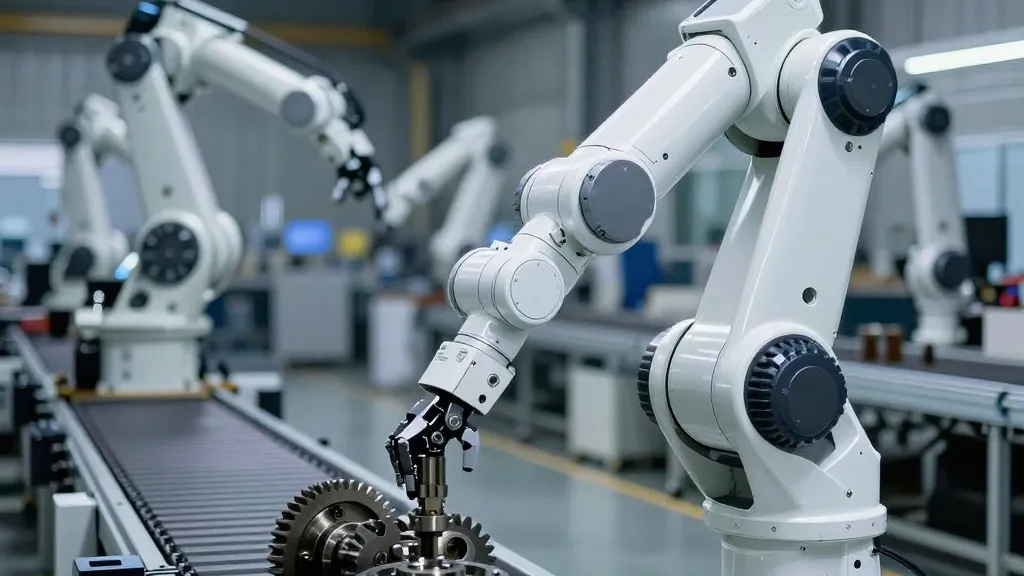
The core of the delay lies in hardware reliability. Musk identified the electromechanical design, specifically the hands, as the primary hurdle. The fingers must be soft enough to handle delicate objects yet tough enough to withstand constant wear, a challenge compounded by the fact that robots cannot heal like human skin. Custom gears also present ongoing reliability concerns. These issues are forcing Tesla to keep parts of the design in flux, preventing the full ramp-up of production.
Production is currently underway on the high-volume line in Fremont, formerly used for the Model S and Model X. While most of the infrastructure for a million units annually is installed, Musk expects it will take at least a year to reach that capacity. The target rate is approximately 20,000 units per week. Until the design stabilizes, the line will operate at a reduced pace while engineers resolve the physical limitations of the machine.
The AI challenge is equally pressing. Tesla lacks the massive fleet of data-generating robots that its cars provide for its Full Self-Driving system. To bridge this gap, the company plans to build between 10,000 and 20,000 units to practice tasks in a dedicated facility called the Optimus Academy. The AI5 chip, central to the robot’s processing power, is scheduled for integration around April 2027. Musk also promised a video within two months showing the robot performing unscripted tasks, aiming to counter criticisms that current demos are merely pre-programmed routines.
This struggle is not unique to Tesla. Competitors are facing similar barriers to generalization. XPeng turned on an automated production line for its IRON robot in Guangzhou in September, with over 80% of core processes automated. XPeng aims for mass production by the end of 2026 and deliveries by mid-2027, a schedule that mirrors or slightly precedes Tesla’s. Meanwhile, Boston Dynamics began producing its electric Atlas robot in January and has already committed all its 2026 deployments, including to Google DeepMind.
Boston Dynamics has adopted a more pragmatic approach to the hand problem, prioritizing sturdy grippers for industrial parts over human-like dexterity. This strategy allows them to deploy robots in car factories, where they are already learning to sequence parts for assembly lines. Hyundai plans to deploy 25,000 robots across its plants in the coming years, a concrete step that contrasts with Tesla’s internal-only usage so far.
Musk stated that to his knowledge, no other company is close to Tesla on general-purpose humanoids. However, the public track record suggests a tighter race. Tesla’s Q3 shareholder letter described the current output as the first "production-quality" bots, implying previous units were not ready for external sale. The timeline has shifted from high-volume external delivery in 2026 to late 2027, following earlier promises of 10,000 units built in 2025.
The next critical milestone is the upcoming video demonstration. If it shows genuine, unscripted work, it may validate the new timeline. If not, the pattern of annual delays will continue. For now, the industry remains in a race to solve the fundamental problems of durability and AI generalization, with Tesla’s competitors quietly making steady progress without the same vocal confidence.
Source: Electrek